The Fundamentals of Cartoning Machines
What is a Cartoning Machine?
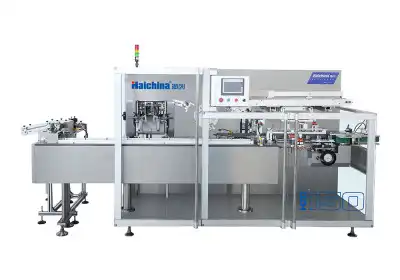
A cartoning machine, also known as a cartoner, is an automated packaging system designed to form, fill, and seal cartons or boxes. These versatile machines are widely used across various industries to package products efficiently and consistently. Cartoning machines can handle a wide range of carton sizes and styles, making them suitable for packaging individual items or small groups of products.
Types of Cartoning Machines
There are several types of cartoning machines available, each suited for different packaging requirements:
- Horizontal cartoning machines
- Vertical cartoning machines
- Top-load cartoning machines
- End-load cartoning machines
- Continuous motion cartoners
- Intermittent motion cartoners
The choice of carton case packer depends on factors such as product characteristics, production speed requirements, and carton design.
Applications and Benefits of Cartoning Machines
Cartoning machines find applications in numerous industries, including:
- Pharmaceuticals: Packaging tablets, vials, and medical devices
- Food and beverage: Boxing snacks, frozen foods, and beverage containers
- Cosmetics: Packaging beauty products and personal care items
- Consumer goods: Boxing electronics, toys, and household products
The benefits of using cartoning machines include increased production speed, improved packaging consistency, reduced labor costs, and enhanced product presentation.
Understanding Case Packing Machines
What is a Case Packing Machine?
A case packing machine, often referred to as a case packer, is an automated system designed to pack multiple products or cartons into larger shipping cases or boxes. These machines are essential for preparing products for distribution and transportation. Case packers can handle various case sizes and styles, accommodating different product configurations and packaging requirements.
Types of Case Packing Machines
Case packing machines come in several configurations to meet diverse packaging needs:
- Top-load case packers
- Side-load case packers
- Wrap-around case packers
- Robotic case packers
- Horizontal case packers
- Vertical case packers
The selection of a carton case packer depends on factors such as product type, case design, production speed, and available floor space.
Applications and Benefits of Case Packing Machines
Case packing machines are utilized across various industries, including:
- Food and beverage: Packing bottles, cans, and packaged foods
- Pharmaceuticals: Organizing and packing cartons of medications
- Consumer goods: Preparing retail-ready packaging for distribution
- Industrial products: Packing bulk items for shipping
The advantages of implementing case packing machines include increased packaging efficiency, reduced manual labor, improved load stability, and enhanced protection during transportation.
Comparing Cartoning and Case Packing Machines
Key Differences in Functionality
While both cartoning and case packing machines are essential components of end-of-line automation, they serve different purposes in the packaging process:
- Cartoning machines focus on packaging individual products or small groups of items into retail-ready cartons.
- Case packing machines are designed to organize and pack multiple products or cartons into larger shipping cases.
Understanding these functional differences is crucial for determining which machine is best suited for your specific packaging needs.
Choosing Between Cartoning and Case Packing
The decision between cartoning and case packing machines depends on several factors:
- Product characteristics and size
- Packaging requirements (retail vs. shipping)
- Production volume and speed
- Available floor space
- Budget constraints
- Industry-specific regulations
In some cases, a combination of both cartoning and carton case packer machines may be necessary to achieve a comprehensive end-of-line packaging solution.
Integration and Automation Considerations
When implementing cartoning or case packing machines, it's essential to consider how they will integrate with your existing production line. Factors to evaluate include:
- Compatibility with upstream and downstream equipment
- Control systems and software integration
- Flexibility to accommodate future product changes
- Maintenance requirements and accessibility
- Operator training and ease of use
Proper integration ensures a seamless packaging process and maximizes the benefits of end-of-line automation.
Conclusion
Understanding the differences between cartoning and case packing machines is crucial for optimizing end-of-line packaging automation. While cartoning machines excel at packaging individual products or small groups into retail-ready cartons, carton case packer machines are designed to organize and pack multiple items into larger shipping cases. By carefully evaluating your specific packaging needs, production requirements, and industry demands, you can make an informed decision on which system – or combination of systems – will best serve your business. Investing in the right end-of-line automation solution can significantly improve efficiency, reduce costs, and enhance your overall packaging process.
FAQs
1. What is the main difference between a cartoning machine and a case packing machine?
A cartoning machine forms, fills, and seals individual cartons for retail packaging, while a case packing machine packs multiple products or cartons into larger shipping cases.
2. Can a single machine perform both cartoning and case packing functions?
While some specialized machines may offer combined functionality, typically, cartoning and case packing are performed by separate machines designed for their specific tasks.
3. How do I choose between a cartoning machine and a case packing machine?
The choice depends on your specific packaging needs, product characteristics, production volume, and whether you're focusing on retail packaging or preparing products for shipping and distribution.
Choose Haichina for Your End-of-Line Automation Needs
As a leading supplier of packaging equipment, Haichina offers top-quality cartoning and case packing machines to meet your end-of-line automation needs. Our range of packaging solutions includes high-speed, energy-efficient, and compact designs suitable for various industries. With over 20 years of experience and a commitment to innovation, we provide CE and cGMP-compliant machines tailored to your specific requirements. Trust Haichina for reliable, customizable, and hygienic packaging solutions. Contact us at [email protected] to discuss your end-of-line automation project with our expert team.
References
Smith, J. (2022). Advanced Packaging Technologies: A Comprehensive Guide to End-of-Line Automation. Packaging Engineering Journal, 45(3), 112-128.
Johnson, R. (2021). Cartoning Machines: Innovations and Applications in Modern Manufacturing. Industrial Automation Review, 18(2), 76-92.
Brown, L., & Davis, T. (2023). Case Packing Systems: Optimizing Efficiency in Distribution Centers. Logistics and Supply Chain Management, 30(1), 55-70.
Thompson, E. (2022). Comparative Analysis of Cartoning and Case Packing Technologies. International Journal of Packaging Research, 14(4), 201-218.
Wilson, M. (2021). End-of-Line Automation: Integrating Cartoning and Case Packing for Maximum Efficiency. Manufacturing Technology Today, 27(3), 132-147.
Lee, S., & Park, H. (2023). Industry 4.0 and Packaging Automation: The Future of End-of-Line Solutions. Smart Manufacturing Quarterly, 9(2), 88-104.