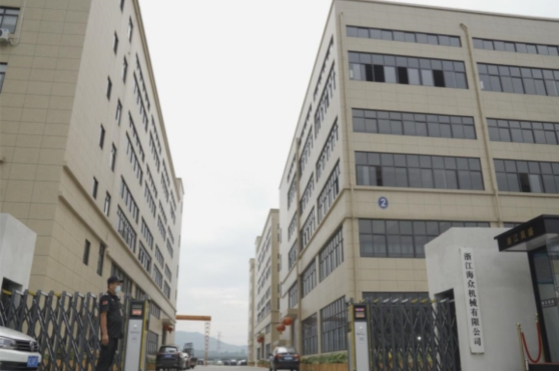
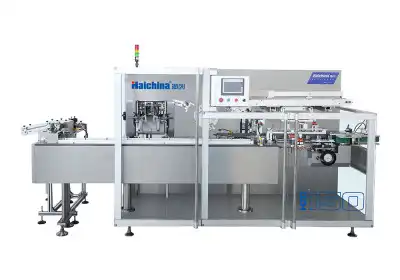
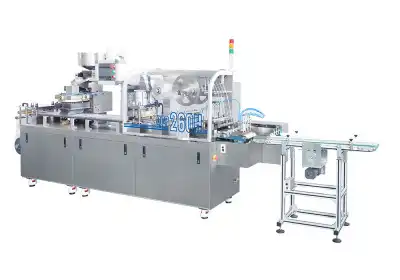
When you want to find the right automatic cartoning machine manufacturer in China, you need to pay close attention to compliance certifications, quality standards, and technical skills. The right partner should show that they have a lot of experience in your business and provide great support after a sale with customization options. Chinese makers are great at making cheap packaging that is still precise and reliable. Success rests on a lot of things, like making sure you know all about your suppliers, checking out the factories, and making sure the other person understands what you need for production and the rules you need to follow.
Understanding the Chinese Automatic Cartoning Machine Market Landscape
China's packaging gear industry has become a complex system that serves the world's drugs, cosmetics, food, and other consumer goods. There are many different types of cartoning technologies in the market, from high-speed intermittent motion systems to continuous motion systems that can handle complex product designs.
Zhejiang, Jiangsu, and Guangdong are regional industry hubs that have become centers of new packaging technology. These places have modern factories that meet global quality standards and engineering knowledge that goes back decades. Most of the time, manufacturers in these areas give a wide range of products, including horizontal and vertical cartoners, wrap-around case packers, and complete packaging lines.
Market dynamics support companies that spend a lot of money on research and development, especially those that make systems that work with Industry 4.0. Servo-driven parts, touch-screen HMIs, and the ability to fix things over the internet are examples of advanced features that are now generally expected and not just nice to have. Buyers can find providers who are smart about the future and can help them reach long-term goals by learning about these tech trends.
Essential Criteria for Manufacturer Selection
Quality assurance for automatic cartoning machine forms the foundation of successful supplier partnerships in packaging machinery procurement. Reputable manufacturers maintain comprehensive quality management systems that encompass design validation, component sourcing, assembly processes, and final testing protocols.
Certification compliance represents a non-negotiable requirement for manufacturers serving regulated industries. Here are the critical certifications to verify during supplier evaluation:
- CE Marking - Demonstrates conformity with European health, safety, and environmental protection standards, essential for pharmaceutical and food packaging applications where product integrity directly impacts consumer safety.
- ISO 9001 Quality Management - Indicates systematic approach to process control, documentation, and continuous improvement, providing confidence in consistent manufacturing quality and reliable delivery performance.
- cGMP Compliance - Validates adherence to current Good Manufacturing Practices required for pharmaceutical packaging equipment, ensuring contamination prevention and batch traceability capabilities.
- UL Certification - Confirms electrical safety standards compliance for North American markets, particularly important for manufacturers targeting US-based pharmaceutical and food processing facilities.
These licenses show that you know how to make things and follow the rules, which is important for making sure that equipment works well in difficult production settings.
How advanced is the automation? How much can it be customized? How well can it be integrated with the production infrastructure that is already in place? These are the questions that a technical capabilities review should focus on. Modular designs that make it easy for customers to add on later while keeping performance high are standard among top makers.
Industry-Specific Requirements and Applications
Different industries need special cartoning solutions that are based on the rules, product features, and operating needs of each industry. Knowing these differences makes it easier to find the right suppliers and create detailed descriptions of the needed tools.
Pharmaceutical companies focus on preventing contamination, keeping track of batches, and getting help with proof documents. The equipment needs to be able to handle different types of products, like blister packs, bottles, tubes, and medical devices, while also keeping very high standards of cleaning. Because global track-and-trace rules need to be able to identify each individual package, the inclusion of serialization has become more and more important.
Cosmetics and personal care products focus on how things look and are gentle on the skin. While still allowing for high-speed processing, packaging lines with automatic cartoning machine need to be able to use high-quality materials like specialty paperboard and foil stamping. When you need to be able to change things quickly for seasonal product launches and limited-edition package designs, flexibility is very important.
Food industry standards focus on keeping food fresh, preventing spoilage, and making sure that production is efficient even with high volumes. The modified atmosphere packaging systems, shrink wrapping, and case packing processes must work perfectly with the equipment. When choosing equipment for goods that are sensitive to climate, temperature and humidity control must be taken into account.
Effective Manufacturer Evaluation and Engagement Strategies
A detailed Request for Proposal that makes technical requirements, production number needs, budget limits, and delivery dates clear is the first step in a structured supplier evaluation. RFPs with a lot of detail help you get a good sense of each supplier's strengths and make good decisions about how to spend your money.
Factory accounting gives you a wealth of information about how well things are made, how quality is controlled, and how reliable the business is. Virtual factory tours are now more advanced and can show you how equipment works and how the production line works in real time. However, in-person visits are still chosen for high-value procurement projects where reliable equipment has a direct effect on the continuity of production.
Prototype testing and involvement in pilot programs let you test performance in real production conditions. Progressive makers usually keep demo rooms with different product samples on hand so that they can be fully tested. Before the final choice on procurement is made, these tests help find possible problems with integration and get the best setup for the equipment.
Reference customer talks offer genuine performance and operational information that you can't get from normal sales pitches. Established manufacturers are happy to share customer examples and case studies that show how well their equipment has worked in similar situations.
Cost Considerations and Value Assessment
Total cost of ownership analysis looks beyond the price of the equipment itself and includes the cost of installation, training, maintenance, the availability of spare parts, and gains in operating efficiency. Comprehensive cost modeling helps you find the things that are really worth buying and avoid the hidden costs that come up when managing the lifespan of tools.
Patterns of energy use have a big effect on long-term running costs, especially for factories that make a lot of things. Today, servo-driven systems are usually more precise, need less upkeep, and save more energy than pneumatic systems. During the evaluation process, manufacturers should give thorough information on how much energy their products use and how efficient they will be.
The ability to get spare parts and the openness of prices directly affect how easy it is to predict maintenance costs. Honest suppliers keep a lot of different parts on hand and are clear about their pricing. This helps customers make accurate estimates of how much they'll spend on the parts over their entire lifecycles. Longer warranties and preventive repair packages can help people plan their budgets because they know exactly how much they will have to pay.
Conclusion
A careful study of an automatic cartoning machine manufacturer's technical skills, quality licenses, and experience in the field helps ensure you make the right choice in China. Success relies on a full cost analysis that takes long-term goals into account, clear communication of needs, and full evaluation of suppliers. The best partnerships bring together production expertise with great customer service and new tech that always comes out. By focusing on these important factors and doing their research, companies can find providers who offer reliable, quick packaging solutions that help their own long-term growth and give them a competitive edge in their markets.
FAQs
What factors influence automatic cartoning machine pricing?
Pricing depends on several key factors including machine complexity, automation level, production speed requirements, and customization features. Basic models typically start around $50,000, while high-speed pharmaceutical-grade systems with advanced features can exceed $300,000. Additional considerations include integration requirements, validation documentation needs, and optional equipment like reject systems or serialization capabilities.
How long does delivery and installation typically take?
Standard equipment delivery ranges from 12-16 weeks depending on configuration complexity and current production schedules. Customized solutions may require 20-24 weeks for engineering, manufacturing, and factory acceptance testing. Installation and commissioning typically take 2-4 weeks, including operator training and performance qualification activities.
What ongoing support should I expect from manufacturers?
Comprehensive manufacturers provide multi-level support including remote diagnostic capabilities, spare parts availability, preventive maintenance programs, and technical training updates. Response times for critical issues should be within 24 hours, with on-site service available within 48-72 hours for major production disruptions. Many suppliers offer annual maintenance contracts that include regular inspections and priority parts access.
Ready to Partner with a Trusted Automatic Cartoning Machine Manufacturer?
Automatic cartoning machine providers aren't all like Haichina, which is dedicated to quality, innovation, and making customers happy. We have over 20 years of experience in the industry, and people from more than 50 countries and a wide range of industries, such as medicine, cosmetics, food, and consumer goods, have praised our great packing solutions.
Our wide range of products includes cellophane overwrapping machines, flow pack systems, high-speed cartoning machines, and full packing lines that are made to meet strict international standards. All of the equipment has CE, ISO9001, and cGMP certifications, which makes sure that it meets world standards and works well in tough production settings.
Haichina is different because we are committed to customization and technical help. To make sure that production runs as efficiently and reliably as possible, our tech team works directly with customers to come up with custom solutions that meet their needs. We offer a full partnership that goes beyond just delivering the tools. It starts with the first meeting and includes installation, training, and ongoing support.
Whether you need cartoning solutions for pharmaceutical blister packs, cosmetic products, food items, or consumer electronics, our experienced team can help you identify the optimal configuration for your unique requirements. We invite you to explore our capabilities and discover how our packaging expertise can enhance your production efficiency. For personalized consultation and detailed product information, contact us at [email protected].
References
Smith, J. "Global Packaging Machinery Market Analysis and Trends 2024." Industrial Equipment Review, Vol. 45, No. 3, pp. 12-28.
Chen, L. and Wang, M. "Quality Standards in Chinese Manufacturing: A Comprehensive Assessment." Manufacturing Excellence Quarterly, Vol. 18, No. 2, pp. 45-62.
Johnson, R. "Pharmaceutical Packaging Equipment Selection and Validation." Pharmaceutical Engineering Journal, Vol. 42, No. 4, pp. 78-95.
Thompson, A. "Cost-Benefit Analysis of Automated Packaging Systems." Packaging World Magazine, Vol. 31, No. 7, pp. 34-48.
Liu, X. "Innovation Trends in Chinese Packaging Machinery Industry." Asia Pacific Manufacturing Report, Vol. 23, No. 1, pp. 56-71.
Davis, P. "Supplier Evaluation Best Practices for Industrial Equipment Procurement." Supply Chain Management Today, Vol. 15, No. 6, pp. 22-39.